
Your SEO looks good on paper.
You’re ranking for more keywords than ever.
Your domain authority hasn’t tanked.
Your brand visibility — at least in traditional reports — feels solid.
And yet, your organic traffic in Google keeps dipping.
If you’ve stared at your analytics and thought, “What gives?”, you’re not alone. As AI tools like ChatGPT, Perplexity, Gemini, and Claude become part of everyday search behavior, a new question is starting to matter just as much as “What’s my ranking?”:
Is AI recommending you?
In this guide, we’ll walk through:
- Why AI search is on track to rival — and eventually surpass — traditional organic search
- Why AI-driven visitors are often more qualified than a typical organic click
- Four practical ways to tell if AI tools are recommending your brand
- What to do if the answer (right now) is “Not really”
Let’s help you see beyond rankings and into the future of how people actually find you.

AI Search Is on Track to Rival Organic Search
For years, “search traffic” basically meant “Google traffic.”
That’s changing.
Generative AI tools and large language models (LLMs) — ChatGPT, Gemini, Perplexity, Claude, Grok, DeepSeek, Llama-based tools, and more — are quickly becoming people’s go-to way to ask questions, get recommendations, and compare options.
Semrush’s recent AI search study projects that website traffic from AI search could surpass traditional organic traffic by around 2028, especially in digital marketing and SEO-related niches. Other forecasts echo the same direction: AI search usage is growing quickly, even if it’s still a smaller slice of total queries today.
Why does this matter for your small business?
Because the people landing on your website a few years from now are just as likely to have discovered you through an AI assistant as through a traditional Google search — and in some industries, that shift will happen even sooner.
And here’s the really interesting part: AI search visitors tend to be more valuable.
Semrush’s data suggests that visitors coming from AI search are worth significantly more — in some cases, over 4x more — than traditional organic visitors, thanks to stronger intent and higher conversion rates.
That makes AI-driven visibility more than a curiosity. It’s a growth channel.
So… How Do You Know If You’re Showing Up in AI Search?
Unlike traditional SEO, there’s no universal “LLM ranking report” (yet).
You can’t just log into Google Search Console and see, “ChatGPT mentioned you 14 times this week.”
But that doesn’t mean you’re flying completely blind. You can absolutely gather evidence — both quantitative and qualitative — that AI tools are starting to recommend you.
Here are four ways to tell if AI is already sending people your way.
1. Look for AI Referral Traffic in Google Analytics
The most direct way to know if AI tools are sending visitors?
They literally show up in your referral traffic.
In Google Analytics 4 (GA4), AI tools like ChatGPT, Gemini, and Perplexity can appear as referral sources — for example:
- chat.openai.com
- perplexity.ai
- gemini.google.com
- or other AI domains/tools, depending on how they link out
Several guides now walk through how to build custom GA4 reports and channel groups specifically to track AI referrals, so they don’t get lost in generic “referral” traffic.
How to Check (High Level)
Inside GA4:
- Open Reports → Acquisition → Traffic acquisition.
- Switch the primary dimension to Session source/medium.
- Look for domains that match AI tools (e.g., chat.openai.com).
- For more precision, build a custom report or exploration that filters for known AI domains.
If you see those sources — even in small numbers — that’s your confirmation: LLMs are recommending you enough that users are clicking through.
If you don’t see them yet, don’t panic. AI may still be mentioning you without linking, or you may be benefiting in more indirect ways (like branded search growth — we’ll get to that).
2. Test AI Tools Like One of Your Customer
The simplest (and oddly most overlooked) method?
Ask AI about your business the way a real customer would.
When people use AI tools, they don’t think in keywords. They think in questions and full sentences.
Instead of typing: landscaper Colorado Springs
They ask: “Who is the best landscaping company in Colorado Springs for building a backyard retaining wall?”
Or: “Which wedding planners in Colorado Springs are great with small, intimate weddings under 50 guests?”
Or: “What’s the most trusted [your industry] business in [your city] for [specific problem]?”
Try This Today
Open a few tools — for example:
- ChatGPT
- Perplexity
- Gemini / Google AI search
Then:
- Search for your core services in your city the way a human would.
- Ask for recommendations: “Who do you recommend for…?”
- Ask directly: “What do you know about [Your Business Name] in [City]?”
Notice:
- Does your business appear by name?
- Is the description accurate?
- Which websites is the AI citing when it mentions you (if any)?
If you’re being recommended, that’s fantastic — it means your brand entity and digital footprint are strong enough that AI tools feel confident pulling you into answers.
If you’re not showing up yet, treat it as a diagnostic, not a failure. Now you know your entity and reputation work has room to grow.
3. Listen to What Your Customers Are Already Telling You
Some of the best data doesn’t come from tools at all — it comes from your customers’ own words.
If you’re not already, start asking:
“How did you hear about us?”
You can:
- Add the question to your contact forms
- Include it in your consultation intake
- Build it into your onboarding process
- Ask it conversationally in sales calls
Then, watch for answers like:
- “I found you on ChatGPT.”
- “Perplexity recommended you.”
- “I asked an AI tool who it recommended in [your city], and your name came up.”
- “I saw you mentioned in an AI summary and then looked you up on Google.”
Those responses are gold. They validate:
- That your business is showing up in LLM answers
- That users trust those answers enough to take real-world action
- That AI is now a meaningful part of your marketing mix (whether or not your analytics fully capture it)
If you already have form submissions with responses like this, celebrate them. They’re proof that your brand is starting to “live” in AI tools.
4. Watch Your Branded Searches (Especially When Other Traffic Drops)
AI often works higher up in the funnel than your reports can see.
Here’s what that looks like:
- Someone asks an AI tool for recommendations.
- The AI responds with your business name plus a few others.
- The person doesn’t click anything — they just type your name directly into Google later.
From your perspective, that visit shows up as:
- Direct or branded organic traffic
- With no clear attribution to AI
But if you zoom out over time, there are patterns you can watch.
Signs AI May Be Boosting Your Brand Awareness
- Branded searches (people Googling your business name) are growing over time
- Overall, organic traffic is flat or down, but branded clicks hold steady or rise
- You’re hearing more people say “I heard about you online” — without clear mention of specific channels
Bain & Company’s research has shown that as AI summaries become more common in traditional search, they can reduce click-through rates while still increasing brand exposure. So, in some cases, your brand is being seen more often — just not always through a click you can easily trace.
If you’re seeing:
- Rankings holding steady
- Non-branded traffic dipping
- Branded searches and direct traffic are maintaining or climbing
…it’s very possible AI is playing a quiet, upstream role in how people discover you.
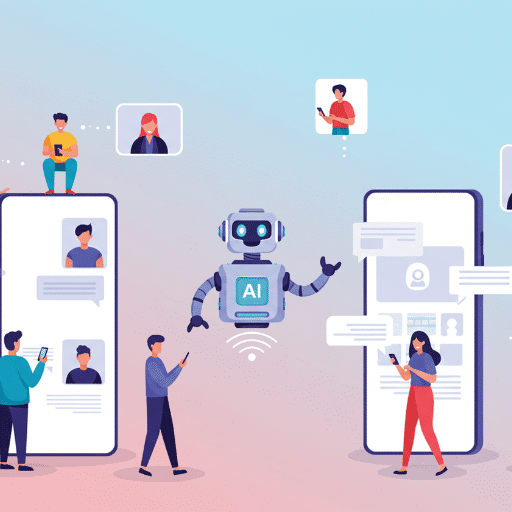
Be the Brand AI Can’t Ignore
Organic search is not disappearing tomorrow — but it is changing, fast.
Search behavior is moving from:
“Type keywords, skim blue links, click a few, piece together an answer…”
to:
“Ask a fully formed question and receive a ready-made, personalized answer — including recommendations.”
In that environment:
- AI search visibility will matter just as much as page-one rankings
- Businesses with strong brand entities and credible footprints across the web will have a major advantage
- The brands that learn to “speak AI” now will be the ones customers keep hearing about — no matter where or how they search
Your dream customer is already using AI to solve problems, compare providers, and make decisions.
The real question is: When AI lists its recommendations… are you on the list?
FAQs: AI Recommendations, LLM Traffic, and Small Business SEO
1. Can I see exactly how often ChatGPT recommends my business?
Not yet.
There’s currently no universal dashboard that shows every time a language model cites or mentions your brand. However, you can infer AI visibility through referral traffic, customer feedback, and branded search trends, and by testing AI tools manually with realistic queries.
2. Are AI visitors really more valuable than regular organic traffic?
Often, yes.
Early research, including Semrush’s AI search studies, suggests that AI search visitors tend to be more qualified and closer to a decision, leading to higher conversion rates and significantly higher value per visit compared to average organic traffic.
3. How do I track traffic from ChatGPT or Gemini in Google Analytics?
You can track AI traffic as referral traffic in GA4 by looking for specific AI domains (like chat.openai.com) and building custom reports or channel groups around them. Several guides now walk step-by-step through setting up filters, explorations, and custom channel groupings for AI tools.
4. What if I don’t see any AI referrals yet — am I behind?
Not necessarily.
AI tools might mention you without linking, or influencing branded searches and direct traffic in ways that don’t show up as obvious referrals. Take it as a cue to strengthen your brand entity, content quality, and review profile so you’re easier for AI tools to recognize and recommend.
5. How do I “optimize” for AI recommendations?
Focus on making your business clear, credible, and consistent across the web:
- Keep your listings aligned (NAP consistency)
- Build and respond to reviews
- Use structured data on your site
- Create helpful, quotable content with complete answers
- Earn mentions on reputable sites and directories
These steps help both traditional search and AI tools understand and trust you.
6. Will AI replace SEO?
SEO is evolving, not disappearing.
Instead of optimizing only for rankings, we’re now optimizing for entities, experiences, and ecosystems — where your website, listings, reviews, and AI visibility all work together. SEO becomes the strategy that helps your brand show up everywhere your customers search, including AI.
7. Do small businesses really need to care about AI search right now?
If your business depends on being found online, yes.
Consumer adoption of AI tools for information and search is already widespread, and usage is growing quickly. Getting ahead of the curve now means you’re not scrambling to catch up later when AI-driven traffic becomes a core revenue driver.
Ready to Make Sure AI Can Actually Find (and Recommend) You?
If your analytics are sending mixed signals — rankings up, traffic down, branded searches holding — you’re probably feeling the impact of AI-powered search already.
The good news: you don’t have to navigate this alone.
At Succeeding Small, we help small businesses:
- Audit how (and whether) AI tools are recommending them
- Track AI-driven traffic and branded search trends
- Strengthen their brand entities and online reputation
- Build content that both humans and AI tools can understand, trust, and cite
Your future customers are already asking AI for recommendations. Let’s make sure your business is one of the names they’re hearing.
Contact us today to talk about your AI readiness, or reach out to our team with your questions — we’d love to help you become the brand AI can’t ignore.